

If you’re feeling stuck between a 1 carat and a 2 carat engagement ring, you’re not alone.
This is one of the most common crossroads brides reach during the custom design process. And it’s rarely just about size.
It’s about perception.
About balance.
About how you want to feel when you look down at your hand years from now.
Maybe you love the presence of a larger stone, but worry it will feel “too much.”
Maybe you’re drawn to the classic elegance of a 1ct, but wonder if you’ll wish you’d gone bigger.
Take a breath.
There is no wrong answer here. There is only the answer that fits you.
Let’s walk through what 1ct versus 2ct actually looks like on the hand, how design choices change everything, and how to decide with confidence instead of pressure.
First, Let’s Reset the Narrative Around Carat Size
Carat weight has become one of the loudest conversations in engagement rings. Social media has amplified the idea that bigger is better. That anything under 2ct is “small.” That size equals success.
None of that is rooted in reality.
Carat is a measurement of weight, not size.
And visual impact has far more to do with cut, shape, proportions, setting, and your hand than a single number ever could.
When brides search “how to find the perfect engagement ring for my style” what they’re really asking is how to tune out the noise and choose something that feels right.
This is where clarity begins.
What a 1ct Engagement Ring Actually Looks Like on the Hand
A well-cut 1ct diamond or moissanite is timeless for a reason.
On most hands, a 1ct stone looks:
• Balanced
• Elegant
• Noticeable without dominating
Especially in shapes like oval, cushion, or emerald cut, a 1ct can appear larger than expected due to surface area.
A 1ct round brilliant typically measures around 6.4–6.5mm.
An oval 1ct can look even larger due to its elongated shape.
A 1ct emerald cut feels refined and architectural.
For many brides, a 1ct ring feels calm. It integrates into daily life easily. It doesn’t demand constant awareness.
This is why 1ct stones are so often chosen for ethical engagement rings and custom designs meant to be worn every day, not just admired.
Who a 1ct Ring Is Perfect For
A 1ct engagement ring often resonates with brides who:
• Prefer understated elegance
• Live active or hands-on lifestyles
• Want a ring that feels effortless
• Value proportion over presence
It’s also a beautiful choice if you’re investing more into craftsmanship, setting detail, or custom hammered wedding bands rather than stone size alone.
A 1ct doesn’t try to prove anything.
It simply belongs.
What a 2ct Engagement Ring Really Looks Like on the Hand
A 2ct stone is undeniably impactful.
It doesn’t whisper.
It speaks.
On most hands, a 2ct ring looks:
• Bold
• Luxurious
• Statement-making
A 2ct round measures around 8.1–8.2mm.
That jump from 1ct to 2ct is visually significant, especially in round stones.
In elongated shapes like oval or pear, a 2ct can feel dramatic and glamorous, particularly when paired with a simple, low-profile setting.
This is where many brides pause.
They love the look.
But they worry about longevity, comfort, and whether it still feels like them.
Who a 2ct Ring Is Perfect For
A 2ct engagement ring often suits brides who:
• Love presence and confidence
• Want their ring to have an extra pizazz
• Prefer minimal settings that let the stone shine
When thoughtfully designed, a 2ct can still feel timeless. The key is restraint everywhere else.
Simple prongs.
Clean lines.
Low profile settings.
A large stone paired with excessive detail often feels dated over time. A large stone paired with simplicity feels intentional.
Why Finger Size and Shape Matter More Than You Think
One of the biggest misconceptions is that carat size looks the same on everyone.
It doesn’t.
Finger length, width, and knuckle shape dramatically affect how a stone appears.
• Slender fingers often make stones look larger
• Wider fingers benefit from elongated shapes
• Long fingers carry size gracefully
• Petite hands may feel overwhelmed by height
This is why trying on rings or working with a jeweler who offers visual renderings and wax models is so important when learning how to design your own engagement ring.
What looks perfect on a size 5 hand may feel entirely different on a size 7 or 8.
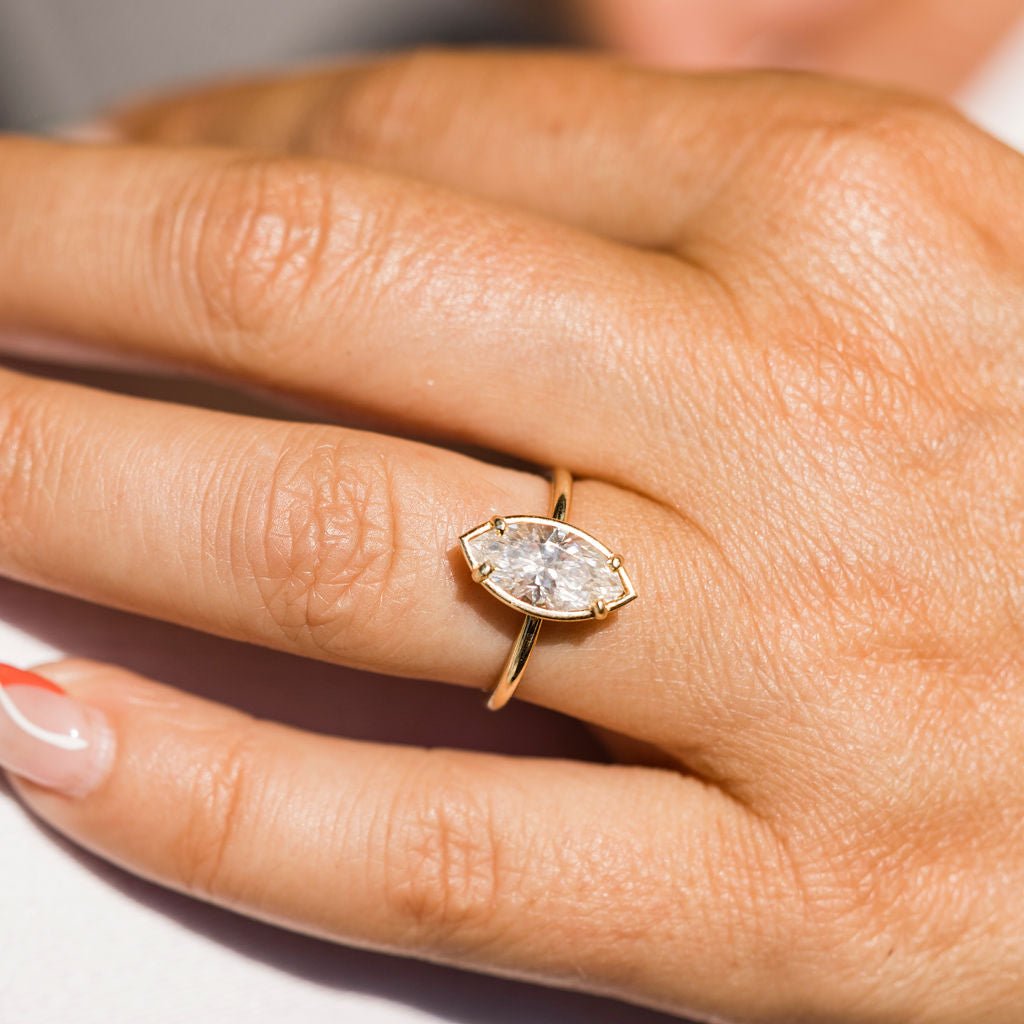
Shape Can Make a 1ct Look Like a 2ct (and Vice Versa)
This is where expertise really matters.
An oval, marquise, or pear spreads its weight across more surface area. That means a 1ct oval often looks significantly larger than a 1ct round.
Meanwhile, a deep-cut stone can hide weight, making a 2ct appear smaller than expected.
This is why two stones with the same carat weight can look wildly different.
Timeless design prioritizes face-up appearance, not numbers on a certificate.
Setting Style Changes Everything
The same stone can feel completely different depending on how it’s set.
A halo can make a 1ct appear closer to a 2ct.
A bezel adds visual weight and protection.
A thin band emphasizes size.
A thicker band balances it.
Low-profile settings ground larger stones and make them easier to wear. High-profile settings exaggerate size and height.
When brides ask “what makes a ring timeless,” this is often the hidden answer.
Timeless rings feel stable on the hand.
1ct vs. 2ct and Lifestyle Reality
Here’s an honest question worth asking.
Do you want to be aware of your ring all day?
Some brides love feeling the presence of a larger stone. Others find it distracting over time.
A 2ct stone may:
• Catch more often
• Require more mindful wear
• Feel heavier
A 1ct stone often fades into the rhythm of daily life in the best way.
Neither is better.
They are simply different experiences.
Budget, Value, and Emotional Weight
“How much should I spend on a custom engagement ring?” is one of the most searched questions for a reason.
A jump from 1ct to 2ct is not linear in cost. It’s exponential, especially with diamonds.
Some brides choose:
• A 1ct diamond with higher cut quality
• A 2ct moissanite for ethical and budget alignment
• A 1.5ct compromise that feels just right
Moissanite vs diamond engagement rings often comes into play here. Moissanite allows for larger carat sizes without sacrificing ethics or design quality.
Again, the right choice is the one that brings relief, not pressure.
What Brides Often Regret (and What They Don’t)
In years of custom engagement ring design, a few patterns emerge.
Brides rarely regret:
• Choosing comfort
• Prioritizing lifestyle
• Designing intentionally
• Trusting their instincts
They sometimes regret:
• Choosing size for approval
• Ignoring how the ring feels day to day
• Rushing the decision
Timelessness isn’t about impressing others.
It’s about still loving your ring when no one else is looking.
A Grounding Exercise Before You Decide
Picture your life five years from now.
You’re doing something ordinary.
Working. Cooking. Traveling. Laughing.
Which ring feels like it belongs in that moment?
That answer matters more than any carat number.
Whether you choose a 1ct or a 2ct engagement ring, the beauty is not in the size.
It’s in the intention.
The balance.
The way it feels on your hand.
Your ring should not create pressure.
It should create peace.
And when it does, you’ll know you chose well.